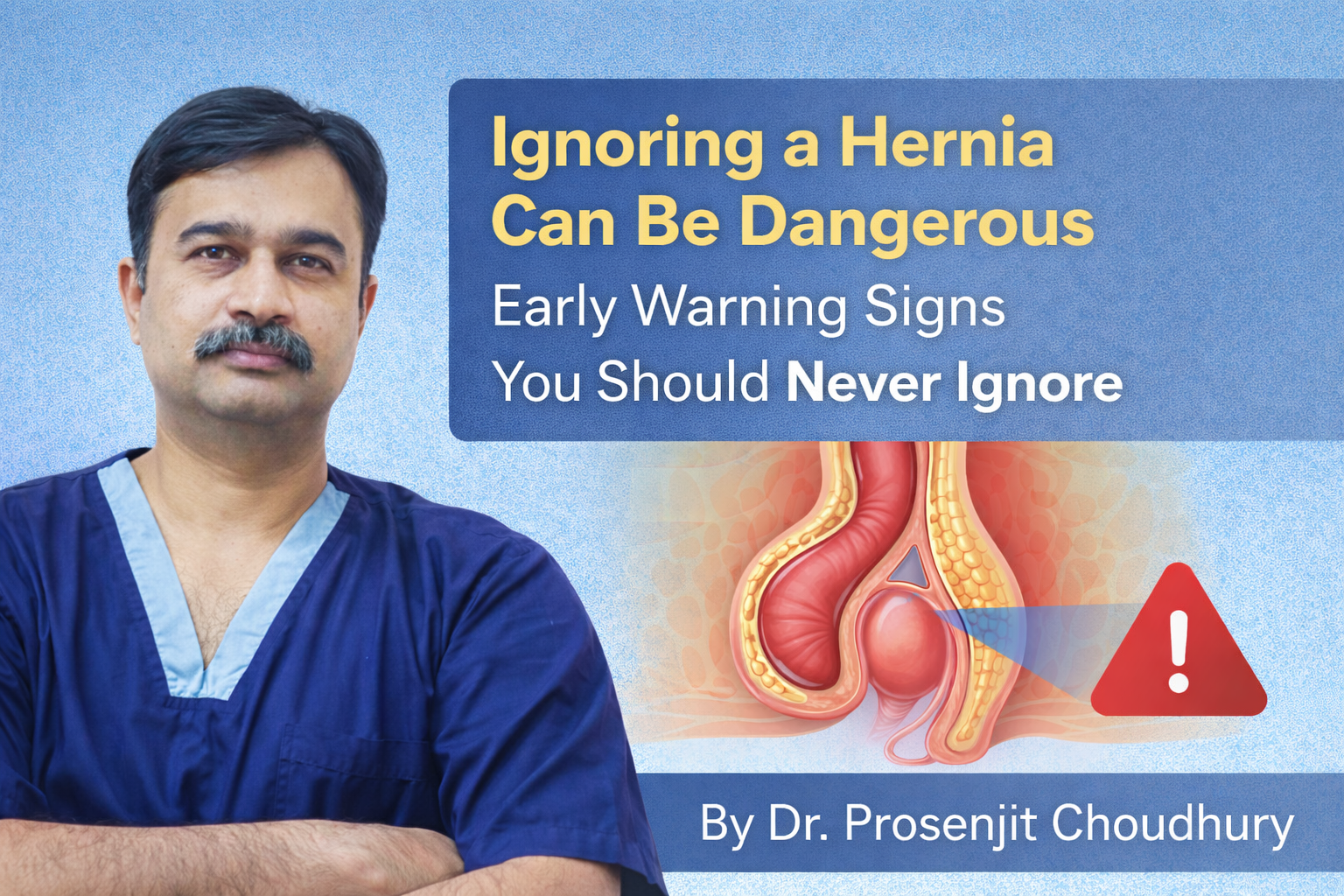
Ignoring a Hernia Can Be Dangerous: Early Warning Signs You Should Never Miss
Posted on: Jan 20, 2026
Hernia is often misunderstood as a minor swelling that can be ignored for years. Many people live with a hernia thinking, “It doesn’t hurt much, so it’s not serious.”
Unfortunately, this belief leads to delayed treatment and, in some cases, medical emergencies.
This guest blog explains what a hernia really is, why ignoring it can be risky, early warning signs to watch for, and when surgery becomes unavoidable—based on modern surgical understanding.
What Exactly Is a Hernia? (Simple Explanation)
A hernia occurs when an internal organ or tissue pushes through a weak spot in the surrounding muscle wall. This creates a visible bulge or swelling, commonly seen in the abdomen or groin.
Hernias do not heal on their own. In fact, they usually grow larger over time.
Common types include:
Inguinal hernia (groin)
Umbilical hernia (near the navel)
Incisional hernia (after previous surgery)
Ventral hernia (abdominal wall)
Femoral hernia (upper thigh)
Hiatal hernia (internal, stomach-related)
Why People Ignore Hernia Symptoms
Many patients delay treatment because:
Pain is mild initially
Swelling disappears while lying down
Daily activities are still possible
Fear of surgery
Hope that medicines or belts will cure it
However, these temporary comforts often hide progressive internal damage.
Early Warning Signs of Hernia You Should Never Ignore
1. A Bulge That Appears While Standing or Coughing
The most common sign of hernia is a soft swelling that:
Appears when standing
Increases while coughing or lifting
Reduces when lying down
This indicates muscle weakness that will worsen over time.
2. Pain or Discomfort After Physical Activity
You may feel:
Dull aching pain
Pulling sensation
Pressure in the groin or abdomen
Pain may increase after:
Walking long distances
Lifting weights
Prolonged standing
3. Burning or Heaviness Sensation
Some patients describe a burning or dragging sensation near the bulge—often mistaken for muscle strain.
4. Difficulty Standing for Long Periods
As hernia enlarges, standing or sitting upright for long hours becomes uncomfortable.
5. Sudden Increase in Pain (Warning Sign)
A sudden increase in pain may signal complications such as incarceration or strangulation—both medical emergencies.
Why Hernia Is a Progressive Condition
Unlike muscle strain, hernia never repairs itself. Over time:
The defect widens
More tissue protrudes
Pain increases
Complication risk rises
Ignoring early symptoms often leads to complex surgery and higher costs later.
Complications of Untreated Hernia
1. Incarcerated Hernia
The protruding tissue becomes trapped and cannot be pushed back. This causes:
Constant pain
Swelling
Bowel obstruction symptoms
2. Strangulated Hernia (Life-Threatening)
Blood supply to the trapped organ gets cut off, leading to:
Severe pain
Nausea and vomiting
Fever
Emergency surgery requirement
Delayed treatment in this stage can be fatal.
Common Myths About Hernia (Busted)
Myth: Hernia belts can cure the problem
Reality: Belts only mask symptoms, they do not repair the defect.
Myth: Hernia surgery is risky
Reality: Modern laparoscopic surgery is extremely safe.
Myth: If there’s no pain, no treatment is needed
Reality: Pain is not the only indicator—complications can occur suddenly.
When Does Hernia Require Surgery?
Surgery is recommended when:
Hernia is diagnosed (even if painless)
Swelling increases in size
Pain affects daily activities
Hernia becomes irreducible
Patient wants permanent solution
Doctors today advise early elective surgery instead of waiting for complications.
Why Laparoscopic Hernia Surgery Is Preferred Today
Modern hernia treatment has evolved significantly. Laparoscopic hernia surgery is now the gold standard for most cases.
Advantages of Laparoscopic Hernia Repair
Small keyhole incisions
Minimal pain
Faster recovery
Lower infection risk
Reduced recurrence
Short hospital stay
Patients often return to routine work within 3–5 days.
Cost Perspective: Early Surgery Saves Money
Many patients delay surgery due to cost concerns. Ironically, delayed hernia treatment often leads to:
Emergency surgery
Longer hospital stay
Higher medical bills
More time off work
Early planned laparoscopic surgery is usually more affordable and predictable.
👉 For a detailed cost breakdown, read:
Laparoscopic Hernia Surgery Cost – Complete Breakdown
https://drprosenjitchoudhury.in/blog-detail.php?slug=laparoscopic-hernia-surgery-cost-kolkata-breakdown
Who Should Consult a Hernia Specialist Early?
You should seek specialist advice if:
You notice any abdominal or groin bulge
Discomfort increases after activity
Hernia interferes with daily routine
You had previous abdominal surgery
You want minimally invasive treatment
Early consultation helps avoid complications and ensures better surgical outcomes.
Why Experienced Surgeons Matter in Hernia Treatment
Hernia surgery outcomes depend heavily on:
Correct diagnosis
Mesh selection
Surgical technique
Surgeon’s experience
Experienced laparoscopic surgeons reduce:
Recurrence risk
Post-operative pain
Complication rates
Life After Hernia Surgery
Most patients report:
Relief from discomfort
Improved mobility
Confidence in physical activity
Better quality of life
Modern surgery allows patients to resume normal life quickly, without prolonged restrictions.
Frequently Asked Questions
Is hernia surgery painful?
With laparoscopic methods, pain is minimal and manageable.
Can hernia come back after surgery?
Recurrence is rare when surgery is done correctly using mesh.
Is surgery mandatory for all hernias?
Yes. Hernia does not heal naturally.
How long does hernia surgery take?
Typically 45–60 minutes.
Final Thoughts
Hernia may start as a minor inconvenience, but ignoring it can lead to serious and even life-threatening complications. Modern surgical advances now offer safe, minimally invasive solutions with quick recovery and excellent outcomes.
If you notice early warning signs, timely evaluation and treatment can prevent unnecessary suffering and complications.
Share This
Recent Posts
-
 A Complete Guide to Laser Piles Surgery in Kolkata: Fast, Safe & Effective
-
 Why Minimally Invasive Hernia Surgery in Kolkata Is Gaining Popularity: Benefits, Cost & Recovery Explained
-
 Laser Vein Removal in Kolkata: Is It the Right Option for Your Spider or Varicose Veins?
-
 Laser Fistula Treatment in Kolkata: Painless Relief by the Best Fistula Doctors Near You
-
 Varicose Veins Treatment During Pregnancy in Kolkata: Complete Guide for Expecting Mothers
-
 Laser Fissure Surgery Without Pain in Kolkata | Fast & Safe Relief
-
 Top 5 Signs You Need to See a Hernia Specialist in North Kolkata – When Laparoscopic Surgery Becomes a Must
-
 Top 7 Mistakes That Make Anal Fistula Worse – Tips from Leading Doctors in Kolkata
Comments (0)
Post Your Comment